Sceye and Softbank Inside The Haps Alliance For Japan
1. This Partnership is More Than Connectivity
When two organisations from very different backgrounds including a New Mexico-based stratospheric aerospace company and one of Japan’s most prestigious telecom conglomerates for a nationwide network of high-altitude platform stations, the tale is more complex than broadband. It is clear that the Sceye SoftBank partnership represents a legitimate bet on the stratospheric system to become a permanent, income-generating part of national-level telecommunications -it’s not a pilot plan or a proof that works, it is the beginning of a full-scale commercial rollout with a timetable as well as a large-scale plan for the country.
2. SoftBank has a Strategic Motive for backing Non-Terrestrial Networks
In the case of SoftBank, its interest in HAPS wasn’t just a blip on the radar. Japan’s geography — thousands of islands, mountainous terrain and coastal areas regularly affected by earthquakes, typhoons, and typhoons — creates persistent connectivity gaps that even ground infrastructure alone can’t close economically. Satellite connectivity can help, however delay and cost are still the primary factors for mass-market applications. A stratospheric network that extends over 20 kilometers, securing its position above specific regions while delivering the lowest-latency broadband available to conventional equipment, solves a lot problems at the same time. For SoftBank, investing in stratospheric platform is a logical extension of an existing strategy to diversify its network beyond terrestrial dependency.
3. Pre-Commercial Business Services Planned For Japan in 2026 – Signal Real Momentum
The most important aspect that differentiates this announcement from previous HAPS announcements is that it will be a provider of commercial pre-commercial services in Japan starting in 2026. This isn’t just a vague commitment — it’s a specific operational goal with regulatory, infrastructure and commercial implications to it. When they reach precommercial status, the platforms must perform station keeping with reliability, providing satisfactory signal quality, and working with SoftBank’s existing network infrastructure. The way this date has been publicly proclaimed suggests both parties have mastered the requirements in terms of technology and regulation in order to view it as a legitimate target rather than aspirational marketing.
4. Sceye Delivers Endurance and Payload Capacity That Other Platforms Struggle to Match
Not all HAPS vehicle is suited to a large-scale commercial network. Fixed-wing solar airplanes typically sell payload capacity in exchange of efficiency at altitude, which limits the amount of telecommunications, or observation equipment they can transport. Sceye’s airship with a lighter weight takes an alternative approach — buoyancy helps carry the vehicle’s weight, meaning that solar power goes towards propulsion along with stationkeeping, and providing power to the onboard equipment instead of simply staying aloft. This architectural decision translates into important advantages in payload capacity and mission endurance, both of which matter significantly when trying to continue to provide coverage throughout populated regions.
5. The Platform’s Multimission Capability Does the Economics Work
One of the less appreciated aspects of the Sceye approach is the fact that one platform does not need to justify its operation cost purely through telecoms earnings. The same vehicle which provides stratospheric broadband could also carry sensors for monitoring greenhouse gases as well as disaster detection also earth observation. For a country like Japan with its high natural hazards and has national commitments to emissions monitoring this multi-payload arrangement is much more straightforward to justify at a federal as well as a commercial level. The antennas for telecoms and temperature sensor aren’t competingthey’re both part of a single platform which is already there.
6. Beamforming technology and HIBS Technology Enhance the Signal Commercially Usable
Being able to deliver broadband over 20 kilometres isn’t simply a matter of setting an antenna to the downward. The signal needs to be shaped, directed, and managed dynamically to serve users efficiently across an extensive expanse. Beamforming technology allows the spherical telecom antenna to focus signal energy the regions with the highest demand instead of broadcasting uniformly and wasting energy over the empty space or uninhabited terrain. Coupled with the HIBS (High-Altitude IMT Base Station) standards that make the platform compatible with existing 4G and 5G device ecosystems. This means that standard smartphones can communicate without specialized equipment, which is an essential requirement for any mass-market deployment.
7. Japan’s Island Geography Is an Ideal Test Case for the Rest of the World
If stratospheric communication works with a high degree in Japan then the pattern is adaptable to every other country having similar challenges in coverage- which is most of the planet. Indonesia, the Philippines, Canada, Brazil and many other Pacific island nations are all facing their own versions of the problem in terms of population distribution across terrain that are incompatible with conventional infrastructure. Japan’s combination as well as regulatory capability and genuine geographic need is arguably the most effective option for testing nationwide networks built on stratospheric platforms. It is likely that what SoftBank and Sceye prove will guide deployments across the globe for a long time.
8. A New Mexico Connection Matters More Than It Appear
Sceye operating from New Mexico isn’t incidental. The state has high-altitude testing conditions, an established aviation infrastructure and an airspace that’s suitable for extended flight testing that stratospheric vehicle development demands. As one of the more serious aerospace companies with a presence in New Mexico, Sceye has developed its product in a setting that facilitates real engineered iterations, not press release cycles. The gap between announcing the HAPS platform and actually station-keeping the same for weeks at for a period of time is vast, which is why the New Mexico base reflects a company that has done the difficult work to fill that gap.
9. Founder Vision is the primary driver behind the Partnership’s Long-Term Goals
Mikkel Vestergaard’s previous work that is rooted in applying technology to human and environmental problems — has informing what Sceye is trying to build and the reasons. The collaboration with SoftBank isn’t solely a commercial telecoms venture. Sceye’s focus the need to identify disasters and real-time monitoring, and connectivity in areas with low service represents a core belief that the stratospheric internet should serve broad social reasons in addition to commercial ones. This perspective has likely resulted in Sceye an even more appealing partner to a company like SoftBank that operates in a regulatory as well as public atmosphere where corporate purpose carries real weight.
10. 2026 will be the year that of the Stratospheric Tier Either Proves Itself or Resets Expectations
The HAPS sector has been promising commercial deployment for longer than most people would like to believe. What is unique about the Sceye and SoftBank timeline truly significant is the fact that it ties particular countries, a specific operator, and also a certain service milestone to a certain year. If the commercial services that are being offered in Japan start on time, and work as promised 2026 will mark an era when the stratospheric internet has moved from promising technology and into functioning infrastructure. In the event that it fails, this industry will be forced to ask more challenging questions regarding whether the engineering issues have been resolved by recent announcements. Either way, the partnership has established a line in sky that is worth keeping an eye on. Have a look at the most popular sceye haps airship payload capacity for site advice including sceye careers, what does haps stand for, sceye aerospace, non-terrestrial infrastructure, Stratosphere vs Satellite, what is haps, Sceye News, Sceye Inc, sceye new mexico, softbank pre-commercial haps services japan 2026 and more.
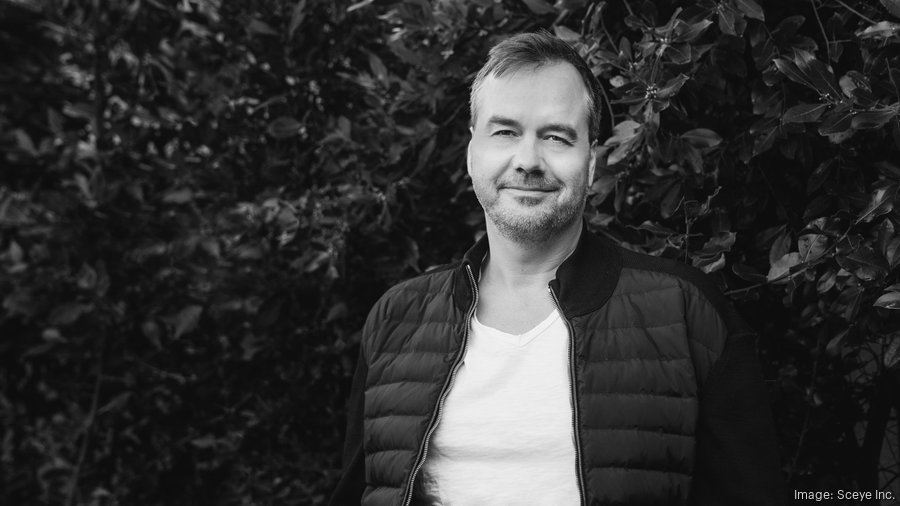
Mikkel Vestergaard’s Vision Behind Sceye’s Aerospace Mission
1. The Founding Vision of a company is often overlooked as a Aspect for Aerospace Company Outcomes
The aerospace industry produces two broad categories of company. The first is built around technologies looking for potential applications — an engineering ability seeking a market. The second takes a matter of concern and proceeds in the opposite direction, focusing on the technology that is needed to address it. This may sound like a logical distinction when you examine what kind of company actually constructs through partnerships, the type of partnerships it pursues, and how it makes sacrifices when resources are scarce. Sceye falls into the second category. being aware of this is vital to understanding why the company has made the specific technological choices it’s made -lightweight design, multi-mission payloads with a focus on endurance, as well as having its founding headquarters at New Mexico rather than the areas of aerospace clusters along the coast that attract many venture-backed space businesses.
2. The Problem Vestergaard started with was much bigger Than Connectivity
Most HAPS companies base their foundational narratives in the realm of telecommunications: an insufficient connectivity, neglected billions, the economics of reaching people in remote areas without connectivity to the internet. These are all real and significant issues, but they’re commercial in nature and require commercial solutions. Mikkel Vestergaard’s starting point was different. His experience in applying sophisticated technology to humanitarian and environmental difficulties led to a perspective at Sceye that views connectivity as one outcome of the stratospheric network rather than its defining purpose. Monitoring greenhouse gas levels the detection of natural disasters, earth observation and oil pollution surveillance and natural resource management were all part of the mission’s framework from the beginning. These were not features added later to make the telecoms platform appear more socially conscious.
3. The Multi-Mission System is the direct manifestation of that Vision
If you consider that the original question was whether the it could be used to solve crucial monitor and connectivity problems at the same time in a single platform, multi-payload stops looking like a clever commercial strategy and becomes like the correct answer to the question. A platform which carries the latest in telecommunications equipment as well as methane monitoring sensors and wildfire detection tech isn’t looking become everything to all — it’s reflecting a coherent view that the issues worth addressing from the stratosphere are interconnected and that a vehicle capable of addressing several of them simultaneously is more in line with the goals than a platform optimised for a single revenue stream.
4. New Mexico Was a Deliberate choice, not an accidental One
The Sceye’s base within New Mexico reflects practical engineering needs — airspace access as well as conditions for atmospheric testing, abilities to reach altitudes, however, it also indicates something about the company’s identity. The well-established aviation clusters that are located in California and Texas draw companies whose main customer base is investors, defense contractors, as well as the media ecosystem that covers the areas. New Mexico offers something different: the physical environment needed to do the actual work of designing and testing stratospheric lighter-than air systems, without the pressure of being close to the people that write and invest in aerospace. As one of the aerospace companies located in New Mexico, Sceye has constructed a program for development centered around validation of engineering rather than the public narrative — a choice that reflects a founder more concerned with whether the platform actually functions rather than whether it produces impressive announcement cycles.
5. A design focus on endurance It reflects a long-term Mission Orientation
Short-endurance HAPS platforms are interesting demonstrations. Long-endurance structures are infrastructure. The focus in Sceye the endurance of its platforms — building vehicles that are able to hold stations indefinitely for months, weeks or even months rather than days — reflects a founder’s understanding that the issues to solve from the stratosphere cannot resolve in between flights. Greenhouse gas monitoring that runs for a period of a week and disappears, leaving a record with limited scientific or regulatory importance. Emergency response that requires the use of a platform that is repositioned and relaunched at the end of each deployment cannot serve as the persistent early warning layer that emergency managers require. The endurance specifications are simply a description of what needs of the mission are as opposed to a performance indicator intended for its own use.
6. The Humanitarian Lens Shapes Which Partnerships Receive Prioritisation
There are many partnerships worth exploring and the criteria an organization uses to assess potential partners reveals something essential about its objectives. Sceye’s alliance with SoftBank for Japan’s nationwide HAPS network -which aims to provide services that will be commercialized in 2026it is unique not only for its commercial dimension, but for its alignment with the country that is in need of the capabilities that the stratospheric network provides. Japan’s seismicity, its complicated geography, and national pledge to environmental protection make the ideal deployment environment where the platform’s multi-mission capabilities serve specific needs, rather than creating revenue in an industry that already has adequate alternatives. The connection between commercial partnership and mission isn’t an accident.
7. It is important to make investments into Future Technologies Requires Conviction About the Issue
Sceye operates in a developmental environment where the technologies it depends on lithium-sulfur batteries that have 425 Wh/kg energy density, high-efficiency solar cells for stratospheric aircraft, advanced beamforming technology for stratospheric telecom antennas — are all just a few steps ahead of the possibilities currently available. The development of a business plan around technologies that are improving but not yet fully mature requires a founder with the right understanding of the need to justify the risk in terms of time. Vestergaard’s fervent belief that the stratospheric internet will be a permanent part of global monitoring and connectivity architecture is what keeps investors investing into the next generation of technologies, which won’t be able to fully exploit their capabilities until the platform they enable has been in use commercially.
8. Its Environmental Monitoring Mission Has Become more urgent since it was established
One of the benefits of forming a firm around a genuine problem rather than a trend in technology, is that the problem is likely to grow more than less significant over time. When Sceye was founded, it was evident that the need to continue monitoring of greenhouse gases at the stratosphere fire detection, wildfire monitoring, and climate disaster surveillance was compelling in the sense of. Since then rapid growth in wildfire seasons the increasing scrutiny of methane emissions under international climate frameworks and the apparent inadequacy of current monitoring infrastructures have all bolstered the case of Sceye considerably. The vision of the founding document hasn’t had for revision in order to stay useful, as the world has been moving toward it.
9. The careers at Sceye reflect what is the Breadth of the Mission
The array of disciplines needed in the construction and operation of stratospheric platform for multi-mission usage exceeds what the majority of aerospace projects require. Sceye careers span materials engineering, atmospheric science Telecommunications, power systems technology development, remote sensing as well as regulatory matters — broad-based profile that represents all the capabilities of the platform is designed to do. Companies founded around a single-use technology usually employ only within that technology’s discipline. Companies founded around a problem that requires multiple converging technology in order to find a solution that crosses the boundaries of these disciplines. The talent profile Sceye offers and develops is an expression of the scope of the vision that was conceived at the time.
10. The Vision Is Effective because It’s Specific About the Issue And Not the Solution
The most long-lasting visions of founding in technology companies are precise about the problem they’re tackling and flexible about the ways to solve it. Vestergaard’s formulation — a long-lasting stratospheric monitoring infrastructure, connectivity, and observation of the environment It is detailed enough to generate clear engineering requirements and clear partnerships criteria, but is flexible enough to take into account the changes in the enabling technologies. As battery chemistry gets better, the efficiency of solar cells improves, as HIBS standards advance, as HIBS standards mature, as the regulatory framework for stratospheric operations develops, Sceye’s mission is not changing, but its approach to executing that mission can use the most effective technology available at any stage. This structure- fixed on the problem but flexible to the solution is the reason why the aerospace mission has coherence throughout a timeline of development that is measured in terms of years, not the cycle of product development. See the recommended softbank group satellite communication investments for blog info including what are the haps, Sceye stratosphere, Sceye News, sceye haps softbank, sceye careers, what’s the haps, High altitude platform station, Beamforming in telecommunications, sceye greenhouse gas monitoring, Direct-to-cell and more.
